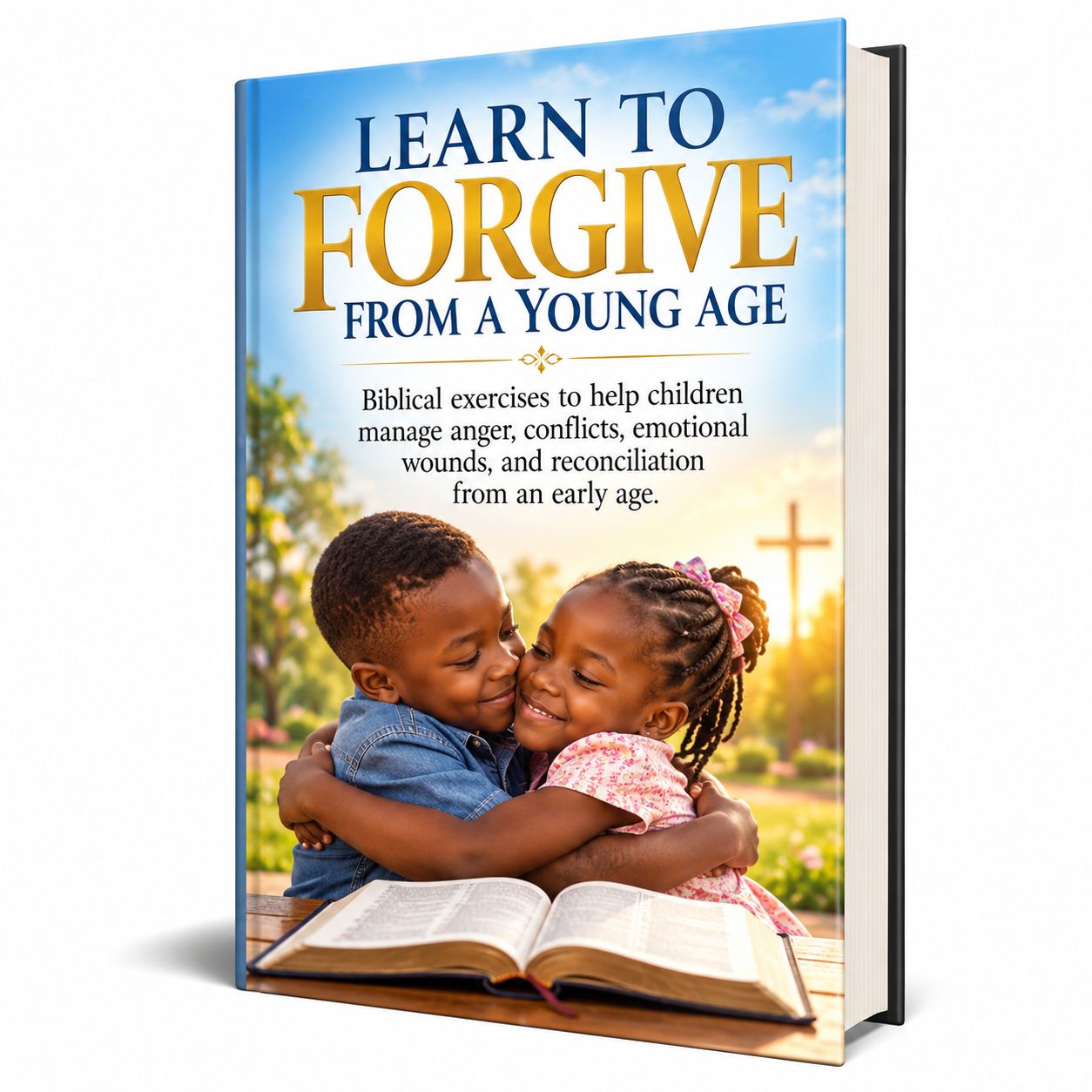
❤️ YOUR CHILD CAN LEARN TO BETTER MANAGE THEIR EMOTIONAL WOUNDS
What if your child could learn from today how to manage anger, express what they feel, forgive after a conflict, and rebuild their relationships — while growing according to the teachings of the Bible?
Children argue.
They can hurt each other with simple words.
A small frustration can quickly turn into intense anger. They may refuse to apologize, remain angry for a long time, or carry an emotional wound inside them after a conflict.
And sometimes, as a parent, you may not really know what to say or how to respond.
You want to teach them how to forgive.
You want to see them grow into adults who are able to love, understand others, and resolve their conflicts with wisdom.
But simply saying:
“You need to forgive.”
is not always enough.
A child first needs to learn how to understand what they feel, why they feel it, and how they can choose a different response.
That is exactly what this guide helps you teach them.
❌ WHY DO SOME CHILDREN STRUGGLE SO MUCH TO FORGIVE?
A child can deeply love their parents, siblings, or friends while still having a hard time when a conflict occurs.
Without appropriate guidance:
❌ A simple argument can turn into a long period of anger.
❌ Hurtful words can remain in their mind for days.
❌ A child may hide their emotions instead of learning to understand them.
❌ They may say “sorry” simply to avoid punishment, without truly understanding responsibility and reconciliation.
❌ They may think that forgiveness means accepting that someone continues to hurt them.
❌ Conflicts between siblings may keep happening without being truly resolved.
❌ As a parent, you may feel like you are constantly repeating the same advice without seeing lasting change.
The problem is not necessarily that your child is “mean,” “difficult,” or “disobedient.”
They may simply not yet know how to manage what they are feeling.
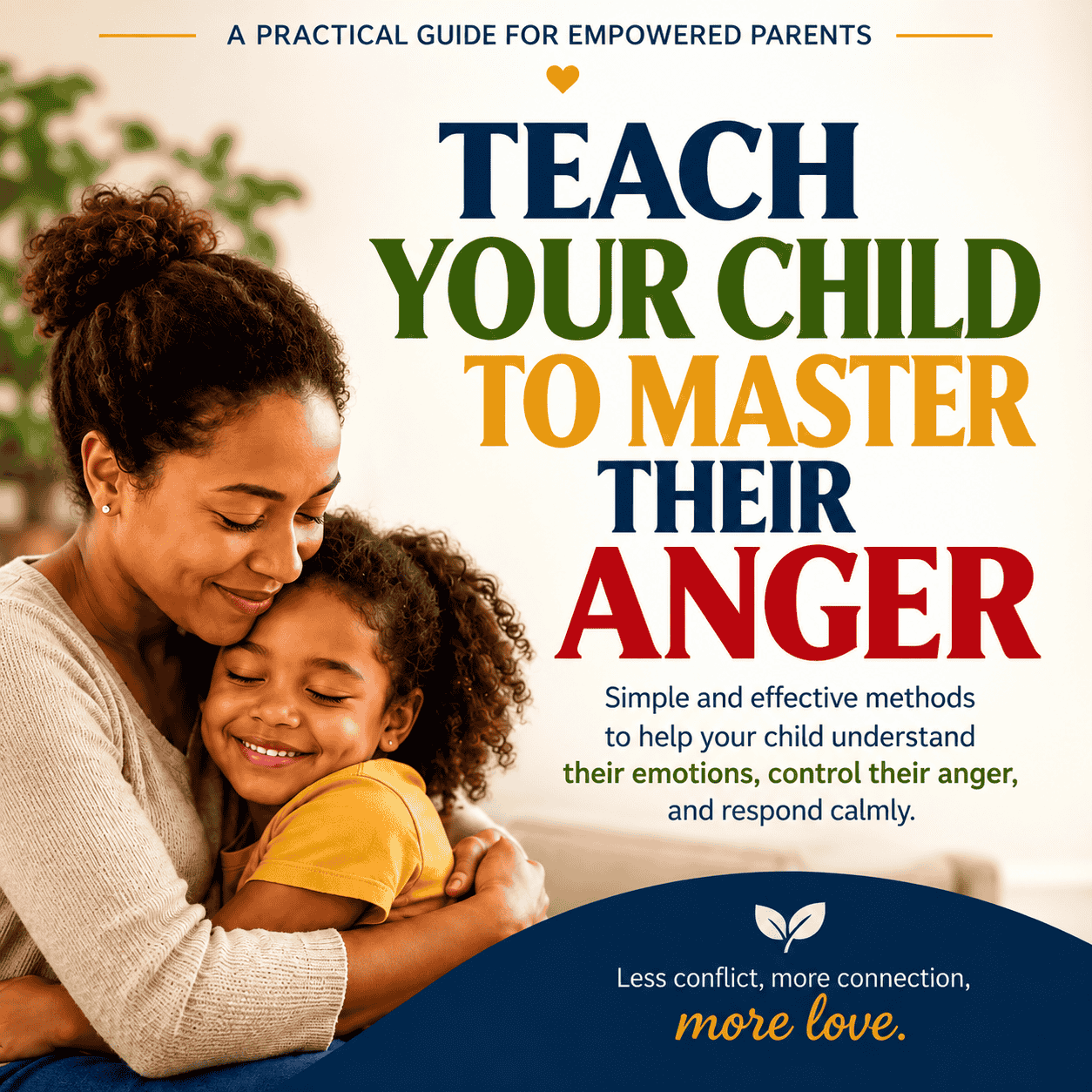
✅ THE SOLUTION: “LEARN TO FORGIVE FROM A YOUNG AGE”
This guide helps Christian parents transform everyday conflicts into real opportunities for emotional and spiritual learning.
Instead of simply asking your child to forgive, you can gradually teach them how to:
- Identify their emotions.
- Understand what causes their anger.
- Express what hurt them.
- Recognize their own mistakes.
- Give sincere apologies.
- Learn to forgive others.
- Seek reconciliation.
- Understand the importance of appropriate boundaries.
- Turn to God in prayer when situations become difficult.
- Apply biblical principles in their everyday relationships.
A simple, progressive, and practical approach designed to help children better understand their emotions and relationships.
🎯 HELP YOUR CHILD MOVE FROM REACTION TO UNDERSTANDING
TODAY
Your child may:
- React immediately when they are upset.
- Hold onto hurt after an argument.
- Say things they later regret.
- Refuse to acknowledge their mistakes.
- Struggle to explain what they are feeling.
- Repeat the same conflicts again and again.
GRADUALLY
With appropriate guidance, they can learn to:
- Identify their emotions.
- Explain calmly what they are feeling.
- Pause before reacting.
- Seek God’s help in difficult situations.
- Understand the steps that can lead toward reconciliation.
- Recognize their own responsibility.
- Discover what forgiveness really means.
- Put biblical teachings into practice in their daily life.
The goal is not to prevent your child from ever feeling angry or to eliminate every conflict.
The goal is to give them the tools they need to know what to do when a difficult emotion appears.
📖 WHAT YOUR CHILD WILL LEARN IN THIS GUIDE
01 — UNDERSTANDING FORGIVENESS FROM A CHRISTIAN PERSPECTIVE
Your child will discover:
- What forgiveness really is.
- The difference between forgiving and forgetting.
- The difference between forgiving and excusing.
- The role of grace.
- The importance of biblical teachings about forgiveness.
02 — LEARNING TO RECOGNIZE THEIR EMOTIONS
Your child will learn how to:
- Identify anger.
- Recognize sadness.
- Understand disappointment.
- Put their feelings into words.
- Talk about their emotions before the situation explodes.
03 — WHAT HAPPENS WHEN ANGER TAKES CONTROL?
They will learn how to:
- Recognize what triggers their anger.
- Pause.
- Regain their calm.
- Think before responding.
- Choose a more constructive reaction.
04 — LEARNING TO SAY “I AM SORRY”
Your child will discover:
- Why it is important to acknowledge their mistakes.
- How their actions can affect others.
- How to give a sincere apology.
- How to repair, when possible, what they have done.
05 — LEARNING TO FORGIVE OTHERS
They will gradually learn how to:
- Recognize what hurt them.
- Express their feelings.
- Understand their anger.
- Avoid revenge.
- Move toward forgiveness at their own pace.
06 — WHEN WORDS HURT
This chapter addresses:
- Insults.
- Mockery.
- Words spoken in anger.
- Arguments.
- Emotional wounds caused by words.
Your child can learn how to express their pain without reproducing the same wound toward someone else.
07 — FORGIVING AFTER CONFLICTS WITH BROTHERS AND SISTERS
Your child will learn how to:
- Explain what happened.
- Listen to the other person’s perspective.
- Recognize their own responsibility.
- Apologize.
- Look for a solution.
- Gradually rebuild the relationship.
08 — HEALING FROM EMOTIONAL HURT
Your child can learn how to:
- Talk about what hurts.
- Understand their reactions.
- Express their sadness.
- Ask for help.
- Develop compassion.
- Find support in their faith.
09 — FORGIVENESS DOES NOT MEAN ACCEPTING EVERYTHING
Your child will discover:
- The difference between forgiveness and tolerating bad behavior.
- The importance of boundaries.
- When it is necessary to speak to a trusted adult.
- Why some situations require protection.
- The difference between forgiveness and reconciliation.
10 — BIBLICAL STORIES THAT TEACH CHILDREN ABOUT FORGIVENESS
Biblical stories can help your child reflect on:
- Forgiveness.
- Love.
- Compassion.
- Grace.
- Repentance.
- Reconciliation.
Each story can become a starting point for discussion and reflection about situations they may experience themselves.
11 — 30 BIBLICAL FORGIVENESS EXERCISES FOR CHILDREN
The guide provides simple activities focused on:
- Emotional awareness.
- Anger management.
- Apologies.
- Gratitude.
- Compassion.
- Forgiveness.
- Communication.
- Reconciliation.
- Prayer.
Simple exercises that you can gradually integrate into your family routine.
12 — TEACHING CHILDREN TO PRAY ABOUT DIFFICULT RELATIONSHIPS
Prayer can help your child express what they feel before God.
You can guide them when they are experiencing:
- Anger.
- An argument.
- Emotional hurt.
- Difficulty forgiving.
- Feelings of guilt.
- A complicated relationship.
13 — BUILDING A CULTURE OF FORGIVENESS AT HOME
The goal is to create a family environment where:
- Emotions can be expressed.
- Problems can be discussed.
- Prayer becomes a family habit.
- Apologies are encouraged.
- Forgiveness is taught and demonstrated by example.
💎 WHY THIS GUIDE CAN BECOME A VALUABLE TOOL FOR YOUR FAMILY
✅ EASY TO UNDERSTAND
Accessible explanations to help you teach these lessons to your child.
✅ BASED ON BIBLICAL PRINCIPLES
Christian faith is integrated into emotional and relationship education.
✅ PRACTICAL
The exercises and activities help turn the lessons into real-life experiences.
✅ CONNECTED TO EVERYDAY SITUATIONS
Sibling conflicts, anger, hurtful words, apologies, difficulty forgiving…
The guide addresses situations children can actually experience.
✅ HELPFUL FOR PARENTS
It provides support when you are looking for a constructive way to guide your child through a difficult situation.
✅ PROGRESSIVE
Each lesson is introduced step by step, according to the child’s age, personality, and needs.
🚀 DON’T LET EVERY CONFLICT BECOME ANOTHER WOUND
You can keep saying:
“Calm down.”
“Say you’re sorry.”
“Forgive your brother.”
“Don’t be angry.”
But a simple instruction does not always show a child how to do it.
Your child needs to gradually learn:
- what to do when they are angry;
- how to talk when they are hurt;
- how to recognize a mistake;
- how to apologize;
- how to forgive;
- how to seek peace.
With appropriate guidance, everyday conflicts can become real learning opportunities.
Anger can become a lesson in self-control.
An argument can become an opportunity to learn communication.
A mistake can become a lesson in responsibility.
An apology can become a lesson in humility.
And forgiveness can become an important step toward maturity.
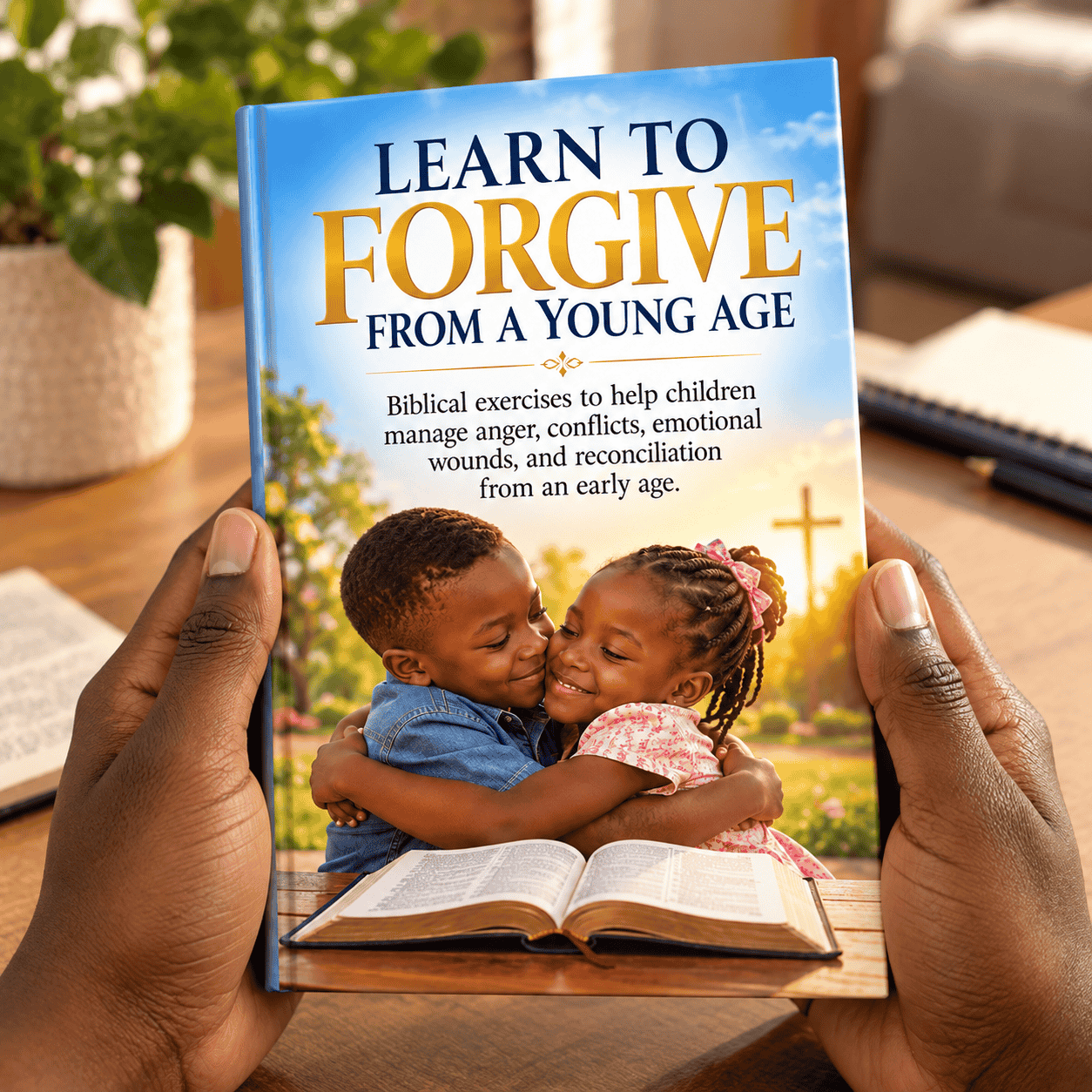
🌱 YOUR CHILD IS STILL LEARNING
Your child is still learning how to:
- Manage their anger.
- Understand their emotions.
- Speak when they are hurt.
- Recognize their mistakes.
- Say “I’m sorry.”
- Listen to others.
- Understand what others are feeling.
- Forgive.
- Love.
And you can guide them through this learning process.
Every conflict can become an opportunity to teach.
Every emotion can become an opportunity for dialogue.
Every mistake can become an opportunity to grow.
Every apology can become a lesson in humility.
Every step toward forgiveness can help build healthier relationships.
And gradually, your child can integrate the principles of Christian faith into the way they treat others.
✝️ START TEACHING THEM TODAY
Don’t only try to make the arguments disappear.
Teach them how to manage them.
Don’t only ask them to forgive.
Help them understand what forgiveness really means.
Don’t only ask them to say “sorry.”
Teach them to recognize their mistakes and make things right whenever possible.
👉 DOWNLOAD “LEARN TO FORGIVE FROM A YOUNG AGE” NOW
And start helping your child understand their emotions, manage conflicts, and discover forgiveness through biblical teachings.
Customer testimonials
Sarah M. ⭐⭐⭐⭐⭐
This guide helped me understand that simply telling my child to calm down was not enough. The exercises are simple and easy to use in our daily routine. It has given me a better way to guide my child through difficult emotions.
Michael T. ⭐⭐⭐⭐⭐
I really appreciated the way this guide explains emotions in simple terms. It has helped me have better conversations with my child after an argument and understand what they are feeling.
Rebecca J. ⭐⭐⭐⭐⭐
Before using these ideas, conflicts between my children could last for a long time. I now encourage them to talk about what they feel before trying to resolve the conflict. It has made a real difference in how we handle disagreements.
Daniel K. ⭐⭐⭐⭐⭐
The chapter about anger was especially helpful to me. I realized that my child needed to learn what to do with their anger, not simply be told that they should not be angry.
Grace W. ⭐⭐⭐⭐⭐
I really enjoyed the practical exercises. They make it easier to turn the lessons about forgiveness into simple activities that we can do together as a family.
James R. ⭐⭐⭐⭐⭐
This guide also made me reflect on the way I personally respond to conflicts. I am now trying to lead by example and show my child how to respond calmly when disagreements happen.
Emily B. ⭐⭐⭐⭐⭐
I especially appreciated the section explaining that forgiveness does not mean accepting everything. That is an important lesson for children to understand as they learn about forgiveness and healthy boundaries.
David P. ⭐⭐⭐⭐⭐
A simple, practical, and easy-to-follow guide. I especially appreciate how it connects emotions, forgiveness, communication, and Christian faith in a way that parents can apply at home.